VHF and UHF / Article 6
Repeaters, Simplex, and Local Coverage That Actually Works
Local radio is where equipment, terrain, antennas, etiquette, and community all meet. A handheld is only the beginning of understanding VHF and UHF coverage.
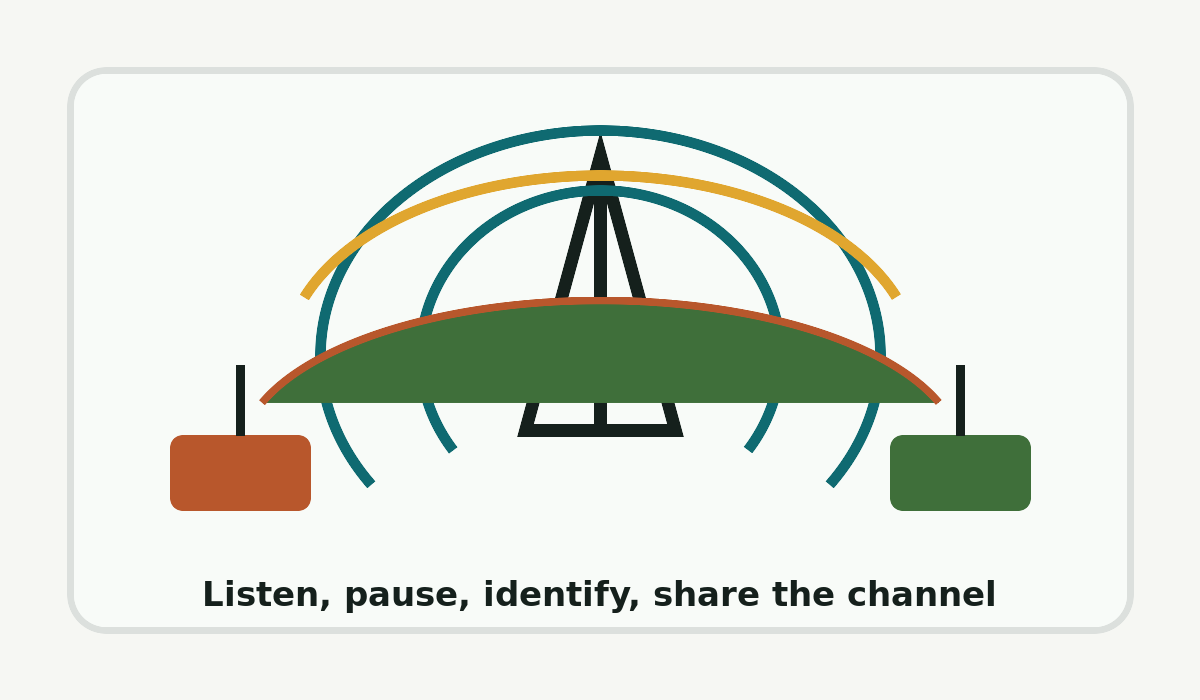
Understand What the Repeater Is Doing
A repeater is not just a louder version of a handheld. It is a high, often well-sited station that listens on one frequency and transmits on another. It may have tone access, linking, timeouts, courtesy tones, emergency practices, and local customs. Learning those details makes an operator more effective and less disruptive.
Programmed memories should be checked instead of trusted blindly. Confirm frequency, offset, tone, name, and any special notes. Keep a printed or offline list for the repeaters that matter most. A phone app is useful until the phone battery is low or the network is unavailable.
- Listen to a repeater before trying to join.
- Identify clearly and leave room between transmissions.
- Know the timeout timer and avoid long monologues.
Use Etiquette as an Operating Tool
Repeater etiquette is not ornamental. It keeps the channel usable. Pause before transmitting so another station can break in. Keep routine traffic concise when the repeater is busy. Make room for new operators. Move long conversations to simplex or another channel when that fits the situation.
Local repeaters are also public examples of amateur radio. A friendly, calm, well-paced exchange teaches by example. If someone makes a mistake, correct gently when correction is needed. The goal is a useful local radio culture, not a performance of expertise.
- Leave a clear gap after each transmission.
- Use plain language when helping a new operator.
- Yield immediately for emergency or priority traffic.
Test Simplex on Purpose
Simplex means station to station without a repeater. It is the honest test of local VHF and UHF coverage. A repeater can hide a weak handheld antenna or a poor operating location because the repeater site does the heavy lifting. Simplex reveals what the two stations can do directly.
Plan short coverage tests. Choose a frequency that fits privileges and local practice, identify properly, and keep notes. Record location, antenna, power, signal reports, and terrain. A few tests from home, vehicle, and portable spots can show which places are reliable and which are blocked by buildings or hills.
- Use consistent power levels during tests.
- Record exact locations or useful landmarks.
- Try both handheld antennas and a better external antenna when possible.
Improve the Antenna Before Blaming the Radio
On VHF and UHF, antenna position can dominate the experience. Moving from inside the house to a window, from a handheld antenna to a mag mount, or from a low antenna to a roofline antenna can change coverage dramatically. Power helps only after the signal has a decent path.
A station should keep adapters, coax, and mounts organized enough to test quickly. If the handheld works poorly indoors, try an external antenna before concluding the repeater is unreachable. If the mobile rig has coverage gaps, note the terrain and antenna location instead of assuming the radio is defective.
- Test from different rooms, windows, and outdoor spots.
- Use quality coax and avoid unnecessary adapter stacks.
- Keep an antenna change log for local coverage tests.
Build a Local Radio Map
A useful local station has a map of what works. It does not have to be fancy. A notebook page with repeaters, simplex results, dead zones, strong portable spots, and weather-net notes can be enough. The map should answer practical questions: which repeater is most reliable from home, which simplex path works across town, and where does the handheld struggle?
Update the map after real use. Construction, foliage, weather, antenna changes, and repeater maintenance can all affect coverage. The map becomes a readiness tool as well as a hobby record. When local communication matters, the station should not be guessing from memory.
- List the top local repeaters with access tones and notes.
- Mark simplex test results by location and antenna.
- Keep the map available offline.